
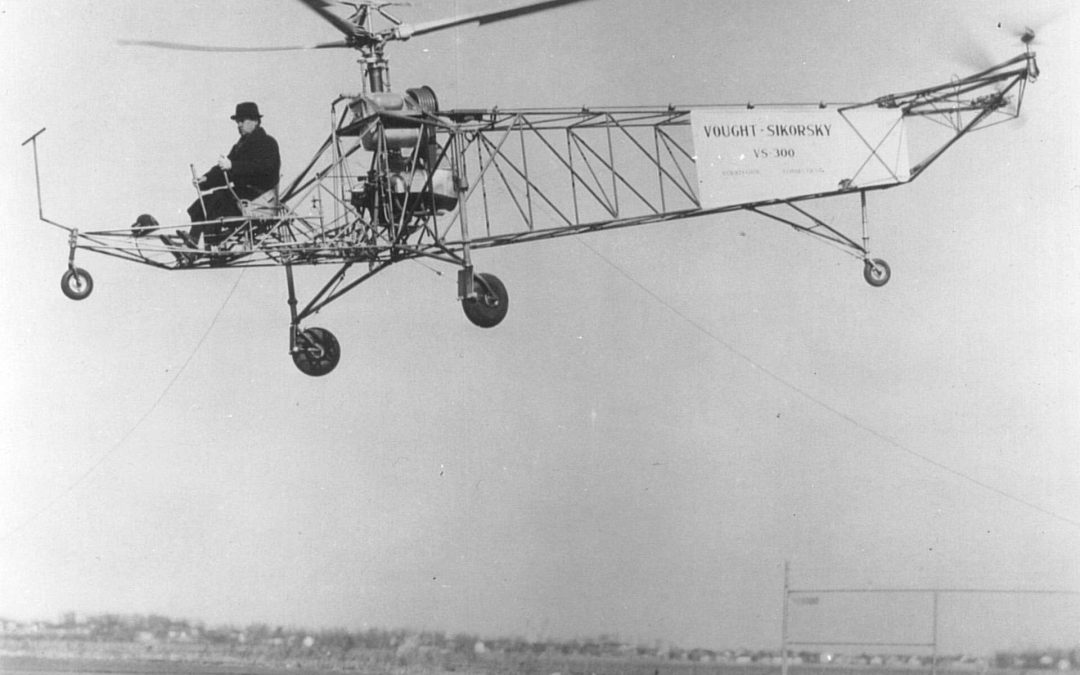
There is a significant difference between teaching someone to fly a helicopter and training someone to become a military helicopter pilot. In the earliest days of aviation there was little alternative to learning through experimentation; even Igor Sikorsky had to develop his own flying ability alongside the aircraft he was designing. Military flying training has come a very long way since then, but the fundamental requirement remains unchanged: the training system must produce the pilot required for the job.
The basic flying skills are obviously common to military and civilian training, and an established civilian syllabus can provide an excellent foundation. The required output, however, is different. A military customer ultimately needs an aviator who can operate as part of a crew, understand the military environment and progress efficiently into operational and tactical training.
This becomes particularly important for air forces working with limited training budgets, relatively small aircraft fleets and finite instructor capacity. Simply adopting a Western military flying training system is rarely the answer. The training system needs to be designed around the customer’s available resources, the students entering the system and, most importantly, the number and standard of pilots the customer actually needs to produce.
It Starts Before Flying Training
One of the most effective ways of improving a military flying training system is to select the right people before expensive training begins. Aptitude testing and structured selection are sometimes treated as a luxury, particularly where candidate numbers are relatively small, but the opposite is normally true. A student who fails after significant ground school, simulator and aircraft training has consumed considerably more money and capacity than a candidate identified as unsuitable during selection.
Aptitude and selection need to reflect the training that follows. Academic ability matters, but so do coordination, spatial awareness, information processing, capacity, decision-making and the ability to learn in a demanding instructional environment. English language ability may also be a significant consideration where aircraft documentation, instruction or subsequent operational training is conducted in English.
Good selection does not guarantee that every student will succeed, nor should it simply be used as a mechanism to exclude candidates. It gives the training organisation a much better understanding of the people entering the system and allows weaknesses or additional training requirements to be identified early. For a customer with a limited budget, reducing avoidable training failure can make a substantial difference to both cost and throughput.
Selection also makes the subsequent training considerably easier to manage. A well-designed aptitude and selection process gives instructors an intake with a reasonable probability of success and allows training resources to be concentrated on development rather than repeatedly trying to overcome fundamental suitability issues late in the course.
Train to the Required Output
Military helicopter training has previously demonstrated what can be achieved when selection, training capacity and operational demand are treated as parts of the same system. The large helicopter training programmes of the Vietnam era operated on an extraordinary scale, turning large numbers of relatively inexperienced candidates into military aviators against an urgent operational requirement. Few modern customers need anything approaching that level of production, but the principle remains relevant: a training system has to be designed around the number of competent pilots the force needs to produce, not simply around delivery of a syllabus.
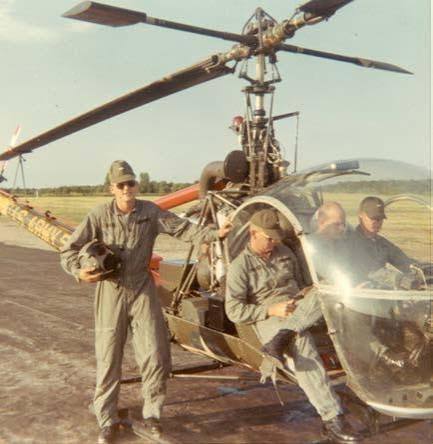
If an air force needs twelve new helicopter pilots each year, the training system needs to be capable of reliably producing approximately that number at the required standard. That means understanding likely attrition, aircraft availability, instructor capacity, weather, maintenance, student loading and the amount of training that can realistically be delivered. Completing a prescribed number of flying hours is not the same as maintaining the throughput required to sustain an operational helicopter force.
Selection, course design and training capacity therefore need to be considered together. Better selection reduces unnecessary attrition, appropriate student loading prevents the system becoming saturated, and realistic course planning allows the customer to forecast when trained pilots will actually become available. For smaller air forces, losing three or four students from a relatively small annual intake can have a disproportionate operational effect several years later.
The required throughput should therefore be established before the training system is designed. From there it is possible to work backwards and determine the number of candidates required at selection, the expected training attrition, instructor numbers, aircraft hours, simulator capacity and annual course loading necessary to produce the required number of graduates.
Use Existing Training Systems Intelligently
Creating military aviators from the beginning does not necessarily require the customer to establish an expensive military flying school from scratch. In many cases, particularly where annual student numbers are relatively small, the most efficient solution is to use an existing civilian-approved training system and add the military elements around it.
That military overlay can extend across ground school, theoretical knowledge, synthetic training and airborne instruction. Military planning and briefing, standard operating procedures, communications, crew cooperation, navigation techniques, situational awareness, decision-making and operational context can all be progressively introduced without compromising the underlying regulatory syllabus.
A navigation sortie, for example, can still achieve exactly the same regulatory training objectives while also requiring military map preparation, accurate timing, structured briefing, appropriate communications and more disciplined decision-making. The aircraft does not need to fly additional hours for the student to receive considerably more relevant training.
The same principle applies throughout the course. Ground training can introduce military terminology and procedures. Simulator periods can develop checks, emergencies, communications, crew cooperation and decision-making. Airborne training can progressively require greater planning accuracy, situational awareness and independence from the student. The regulatory syllabus remains intact, but the context in which it is delivered increasingly reflects the environment in which the graduate will eventually operate.
This also makes later military training considerably easier. Students arrive at advanced and operational training already familiar with the language, processes and expectations of military aviation rather than encountering them for the first time after completing a predominantly civilian course.
Make Expensive Training Count
Perhaps the greatest change in modern military flying training is the amount that can now be achieved before a student ever starts an engine. Modern full-motion simulators, representative glass cockpits and increasingly capable synthetic environments allow considerably more training to take place before an expensive aircraft hour is consumed. Used properly, this is particularly valuable to smaller forces where aircraft availability, fuel, maintenance and instructor capacity are often the limiting factors.
Ground instruction should prepare the student for synthetic training, and synthetic training should prepare the student for the aircraft. Procedures, checks, communications, emergencies, navigation and increasingly complex decision-making can all be introduced and rehearsed before consuming an airborne training hour. Modern simulation can also expose students repeatedly to situations that would be inefficient, impractical or inappropriate to reproduce in the aircraft.
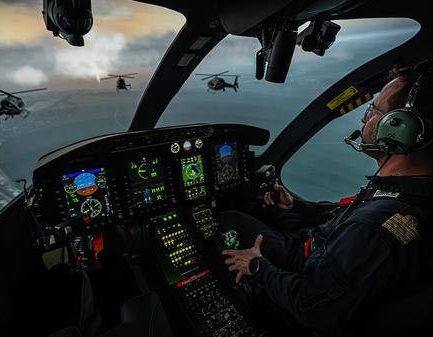
This does not mean replacing flying with simulation simply because simulation is cheaper. Some competencies can only be properly developed and assessed in the aircraft, and ultimately a helicopter pilot needs to fly helicopters. The objective is to ensure that aircraft time is being used for the things that genuinely require an aircraft rather than repeatedly teaching procedures or concepts that could have been mastered elsewhere.
For customers operating small fleets, this approach can materially increase training capacity without purchasing additional aircraft. It also makes airborne instruction considerably more productive because students arrive at each stage better prepared. An instructor who is not spending half the sortie correcting basic procedural knowledge can concentrate on developing the student’s flying, judgement and airmanship.
The Training System Has to Fit the Customer
Military customers do not all start with the same student population or require the same operational output. Entry standards, educational backgrounds, previous aviation exposure and English language ability can vary considerably between countries. So do aircraft availability, infrastructure, instructor numbers, simulator access and available training hours.
This is particularly relevant when delivering military flying training in developing aviation markets. A training model designed around the resources and selection system of a large Western air force cannot simply be transplanted into another country and expected to produce the same result. The training system has to recognise the actual input standard and provide a realistic progression from that point to the required output.
That does not mean lowering the final standard. It means designing a realistic route to achieving it. Some students may require additional foundation training before flying. Others may benefit from greater use of synthetic training, additional theoretical instruction or a different pace of progression. Where weaknesses are identified during aptitude assessment or early training, they can often be addressed relatively cheaply. Discovering the same weakness after substantial aircraft training is considerably more difficult and expensive.
The operational requirement also matters. A helicopter force primarily conducting troop transport, border security, CASEVAC and humanitarian support requires a different training emphasis from an organisation preparing crews for high-intensity tactical operations. There will be common foundations, but the training system should ultimately produce the pilot the customer needs rather than replicate another nation’s syllabus simply because that syllabus already exists.
The Output Should Be a Military Aviator
A civilian licence may form part of a military flying training programme and, in many cases, provides a useful regulatory framework. It should not define the final product. The student completing basic helicopter training should already understand military planning and briefing, standardisation, crew operations, disciplined decision-making and the requirement to operate the aircraft in support of a mission.
They will still require conversion, role and tactical training, but those later courses should develop an existing military foundation rather than attempt to create one retrospectively. The difference becomes increasingly apparent as training progresses. Students who have been exposed to military behaviours and expectations throughout basic training generally find the transition into operational training much more natural because the aircraft and mission may be new, but the underlying approach is not.
For customers operating within constrained budgets, getting this right has very practical consequences. Appropriate aptitude assessment and selection reduce avoidable failure, good course design protects throughput, effective use of ground and synthetic training reduces pressure on aircraft hours, and introducing military behaviours from the beginning makes subsequent training considerably more efficient.
The aim is not to recreate an expensive Western military flying training system in another country. It is to understand what the customer needs, what resources are available and where the students are starting from, then build a training system capable of reliably bridging that gap.
The measure of success is ultimately straightforward: producing the number of military helicopter pilots the customer requires, at the required standard, within the resources available, and properly preparing them for what comes next.
HDP